
JV to export e-carts, aim for 10% global market share, $1 bn turnover and innovation in driverless tech.

Ola Electric share price strategy: The meteoric rise of Ola Electric share price has left analysts and investors bewildered. Yet, they suggest investors hold on to the stock as it remains a pure "momentum" play. Since its listing on August 9, the stock has surged 92 per cent (till August 19) over its issue price of Rs 76, taking its market capitalisation to a little over Rs 63,000 crore.

TVS Motor Company launched its first electric scooter, Scooty Teenz Electric, in Bangalore on Wednesday. Run on the Valve-Regulated-Lead-Acid (VRLA) battery, the vehicle is powered by a 800 watt motor and can carry up to 130 kg of load. It can deliver an average range of 40 km per nine hours of battery charge. The maximum speed the vehicle can clock is 40 kmph. It is targetted at is teenage girls who use vehicles to travel short distances ranging between 15 and 25 km per day.

RIL subsidiary Reliance New Energy Solar, Ola Electric, Hyundai Global Motors Company and Rajesh Exports have been approved for receiving incentives under the Rs 18,100 crore Production Linked Incentive (PLI) scheme for battery manufacturing in India, sources said on Thursday. "The ministry had received bids from 10 companies with a capacity of 130 GWh. Reliance, Ola Electric, Hyundai and Rajesh Exports have qualified for ACC batteries," a source said. Other companies which had applied for the PLI scheme for Advanced Chemistry Cell (ACC) batteries were Lucas-TVS, Mahindra & Mahindra, Amara Raja Batteries, Exide Industries, Larsen & Toubro and India Power Corporation Limited.

The Nifty 50 index could rise around 24 per cent from current levels to 32,032 by December 2026 in a bull-case scenario, Kotak Securities said in a recent note. "We value Nifty at a 10 per cent premium (at 22x) to the 10-year average price-to-earnings of 20x on 2027-28 estimated (E) earnings per share (EPS) of Rs 1,456, and arrive at a December 2026 Nifty target of 32,032," the analysts wrote.

Auto major Mahindra has ambitious plans for its electric cars project, that include ramping up its output to 60,000 units a year, high-end electric powertrains, and 380 to 650 volt battery systems.

The growing complexity of E2Ws and the evolving threat landscape make it challenging to guarantee complete immunity from attacks.

Tata Motors is looking to increase passenger vehicle prices from next month in order to make its model range compliant with stricter emission norms which kick in from April 1 next year, according to a top company official. In an interaction with PTI, Tata Motors Managing Director - Passenger Vehicle and Electric Vehicles Shailesh Chandra said the price revision would also offset the impact of commodity prices, which have remained high for the most part of the year. "The regulatory change will have its impact on the cost. Even the real impact of softening of commodity prices is only going to come from next quarter and we still have the residual impact of the commodity escalation that we have seen during the year," Chandra said.

'This is not just a cosmetic refresh,' said Suhas Rajkumar, founder and chief executive officer of Simple Energy. 'We have re-engineered the battery integration, made the scooter lighter, improved performance and expanded the portfolio so customers can choose based on real usage needs.'
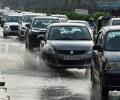
Even if you have a comprehensive motor insurance policy, it may not provide sufficient protection against monsoon-related risks.

Mahindra Electric's latest offering, the BE 6e, is not just an electric vehicle, it's a revolution, asserts Rajesh Karkera.

BYD's new charging system is capable of up to 1000kW charging speeds which may be achievable in China, the carmaker's home market, but such high charging speed is not available in India.

'In the luxury car segment, the adoption of EVs is almost double compared to the mass market.'

Investigation into the Mumbai BEST bus accident suggests human error as the cause, with the vehicle appearing mechanically sound. The accident resulted in four fatalities and several injuries.
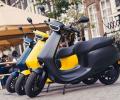
Electric two-wheelers have zipped past the half-a-million registration mark and achieved a market penetration of 4 per cent at the fag end of Calendar 2022, according to data released by VAHAN. According to VAHAN data for the year (until December 27), 560,000 two-wheelers were registered in the country, up a staggering fourfold over 2021, when only 136,000 were registered, and when electric vehicle penetration was a mere 1.05 per cent. The total number of two-wheelers (internal combustion engine, or ICE, and electric) registered so far in 2022 stands at 14.5 million, up only 12.7 per cent over the previous calendar year.
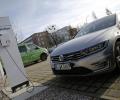
The electric vehicle market in India needs a policy push that goes beyond targets, says Vandana Gombar.

In a fragmented electric three-wheeler market where no company has more than a 10 per cent share, leave alone a dominant presence, can Bajaj Auto storm in and become king? The company is set to launch its range of electric auto rickshaws in June and hopes to replicate its success in ICE three-wheelers where it is the undisputed market leader with a 63 per cent market share. Can it be crowned king of the electric three-wheeler market too? Overall, electric sale volumes are growing at breakneck speed.

Traversing from being just vehicle manufacturers to mobility solutions providers amid a raging debate over which eco-friendly technology must be incentivised, the Indian automobile industry is driving in the new year under the shadow of a slowdown in sales with the post-pandemic pent-up demand in distant memory. The shift in the auto industry -- where advanced technologies like autonomous driving, vehicle intelligence, connected features and electrification are quickly gaining traction -- will be reflected in the upcoming Bharat Mobility Global Expo in which India's flagship Auto Expo has been clubbed to be held from January 17-22, 2025 in Delhi-NCR.

India has a history of jugaad, and retrofitting vehicles is one such manifestation of the legendary Indian skill. Not so long ago autorickshaws and small Marutis used to strap on subsidised LPG cylinders and power themselves to a cheap ride. There were the odd explosions, lives were lost, but the jugaad continued. Then compressed natural gas (CNG) was introduced in Delhi following a court order. Initially, customised CNG kits were fitted to conventional (internal combustion engine or ICE) autos cheaply, enabling commuting at less than half of what you would cough up for diesel. The industry is better organised now with Suzuki and Hyundai designing CNG-fired vehicles, and Mahindra and TVS manufacturing liquefied petroleum gas (LPG)-powered three wheelers.
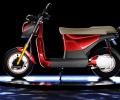
Smaller players manufacturing electric two-wheelers (E2Ws) are unlikely to raise prices of their models initially in 2024 in order to ensure volumes do not drop. The prices of E2Ws range from Rs 90,000 to Rs 1 lakh, the players being Lohia Auto, Godawari Electric, Emobi, etc. As India's E2W sector gears up to go past one million in 2024, manufacturers are likely to maintain price stability, underpinned by strategic independence from subsidies under Faster Adoption and Manufacturing of Electric (and Hybrid) Vehicles II (FAME II), localisation efforts, sustainability initiatives, and a focus on affordability.
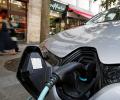
Road Transport Minister Nitin Gadkari on Tuesday said rapid strides in technology and green fuel will reduce the cost of electric automobiles, bringing them at par with petrol-run vehicles in the next two years. Replying in the Lok Sabha on the Demands for Grants for Road Transport and Highways Ministry, 2022-23, Gadkari emphasised the need to shift to cost-effective indigenous fuel and hoped that this fuel will be a reality soon, bringing the pollution levels down and improving the overall situation in Delhi.
It is keen on electric cars as battery costs go down

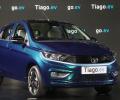
Tata Motors on Wednesday launched its Tiago EV with introductory prices for first 10,000 customers ranging between Rs 8.49-11.79 lakh
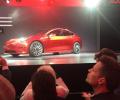
The vehicle will not be available until end-2017, or later.
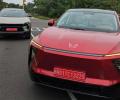
Customers who have already booked earlier variants will also have the option to upgrade to the 79 kWh battery version.
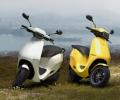
The Indian entrepreneurship success story will soon see one more company debuting on the public markets. Ola Electric, the electric vehicle (EV) company, has become the first such firm that has filed its draft red herring prospectus (DRHP) with the Securities and Exchange Board of India for its initial public offering (IPO). This is a fresh issue of equity shares of up to Rs 5,500 crore and an offer for sale (OFS) of more than 95 million equity shares at a face value of Rs 10.

From attractive EMIs to assured buyback guarantees, luxury carmakers have lined up a slew of offers to woo customers this festival season to address dwindling sales amid rising inventories.

The electric vehicle evolution in India's passenger vehicle market has remained frozen in time and may see limited adoption over the next decade, experts say.

Electric mobility in India is touted to be the way to the future, but implementation of large-scale projects to bring infrastructure for charging is still lacking.

The major reason for the policy confusion over e-vehicles is the lack of conviction within government about the utility of this disruptive technology and its role in India's larger Paris Agreement climate change commitments.
Under regulatory scanner, Bengaluru-based Ola Electric has witnessed an uptick in its sales after facing a decline during the last few months. The company's daily average sales rose to 1,154 units in October, according to Vahan data from the Ministry of Road Transport and Highways (MoRTH). With sales reaching 17,315 units between October 1 and October 15, the company has also boosted its market share to 34 per cent, up from 27 per cent in September, in the electric two-wheeler (e2W) segment.

'The scheme excludes tractors, light commercial vehicles, and medium and heavy commercial vehicles.'
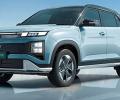
Hyundai Motor India Ltd (HMIL) has since 2019 saved around Rs 5,700 crore in foreign exchange (forex) by locally manufacturing or sourcing more than 1,200 components, including battery packs for electric vehicles, said a senior executive of the automaker. The company's efforts for Aatmanirbhar Bharat, the government's campaign for domestic manufacturing, have resulted in a localisation rate of 92 percent in India, said Gopalakrishnan Chathapuram Sivaramakrishnan, whole-time director and chief manufacturing officer at HMIL.
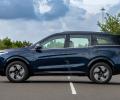
The XEV 9S is poised to disrupt the market, specifically with its entry-level variant called the 'Pack One Above', which offers a level of equipment rarely seen in base models, writes Rajesh Karkera/Rediff.com.

Ola Electric, India's largest maker of electric scooters, launched its most affordable ride on Tuesday, in an attempt to woo more customers and expand its electric two-wheeler lineup.

The Rs 1-trillion Research Development and Innovation (RDI) fund, which was announced in the July budget for FY25, of which Rs 20,000 crore has already been allocated, will be operationalised in the next two to three months, a top official said.

'The petrol lobby is very rich and strong.'

Nearly a decade ago, the first fully electric vehicle (EV) caught fire on the road in the US. It was a model from Tesla, the world's most admired EV maker. A metal fragment punctured the underbelly of the vehicle, penetrating its battery pack, leading to a fire. Indian lawmakers and automakers have had nine years to study the incident (in fact, three Tesla Model Ss caught fire in two months in 2013) but seem to have learnt little.

Numeros Motors is also planning to come up with a passenger vehicle four-wheeler or a three-wheeler by 2027.
